
OPD queue management in India isn't quite the same problem as it is elsewhere, and advice written for a different context often misses the actual shape of it. Patients don't book weeks ahead and arrive on time: they walk in, cluster right when the clinic opens, and often bring family along.
Design for surge arrivals, not steady ones. Token numbers already work culturally: the failure is usually visibility, not the concept. And accompanying family members roughly double or triple your real "how much longer" questions.
Design for walk-in surges, not steady arrivals
Most Indian clinics see two or three real surges a day: opening hour, right after typical office hours, sometimes lunch. A queue system that assumes even arrivals looks fine on a quiet Tuesday and breaks on a Monday morning.
Token numbers already work because patients already trust them
You don't need to convince Indian patients a numbered token system is legitimate: government hospitals and banks have used it for decades.
What clinics get wrong isn't the concept, it's failing to make that number visible and current. A token nobody can check just becomes a number a patient has forgotten.
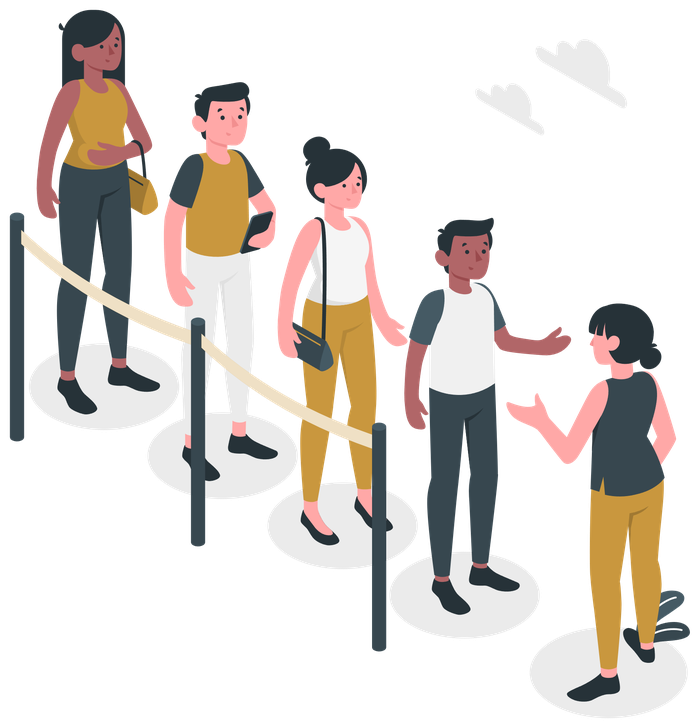
Real OPD problems, and the actual fix
Walk-ins and bookings need one shared order.
A separate phone diary reconciled only in person is where most disputes happen.
Family members waiting counts too.
Your real "how much longer" question volume is often 2–3x your patient count.
An emergency case will disrupt the queue: plan for it.
The clinics that handle it well have a visible way to signal the order shifted, not just let everyone guess.
Built for a busy waiting room, not a quiet office
Walk-ins and phoned-in bookings in one real sequence, a live token that's actually visible, and a display board built for exactly this kind of room.
Book a demo